
Project case study
Pine Floorboards Restored After Bitumen Removal in Whickham
See how original pine floorboards in a Whickham bungalow were restored after the removal of a heavy bituminous coating.
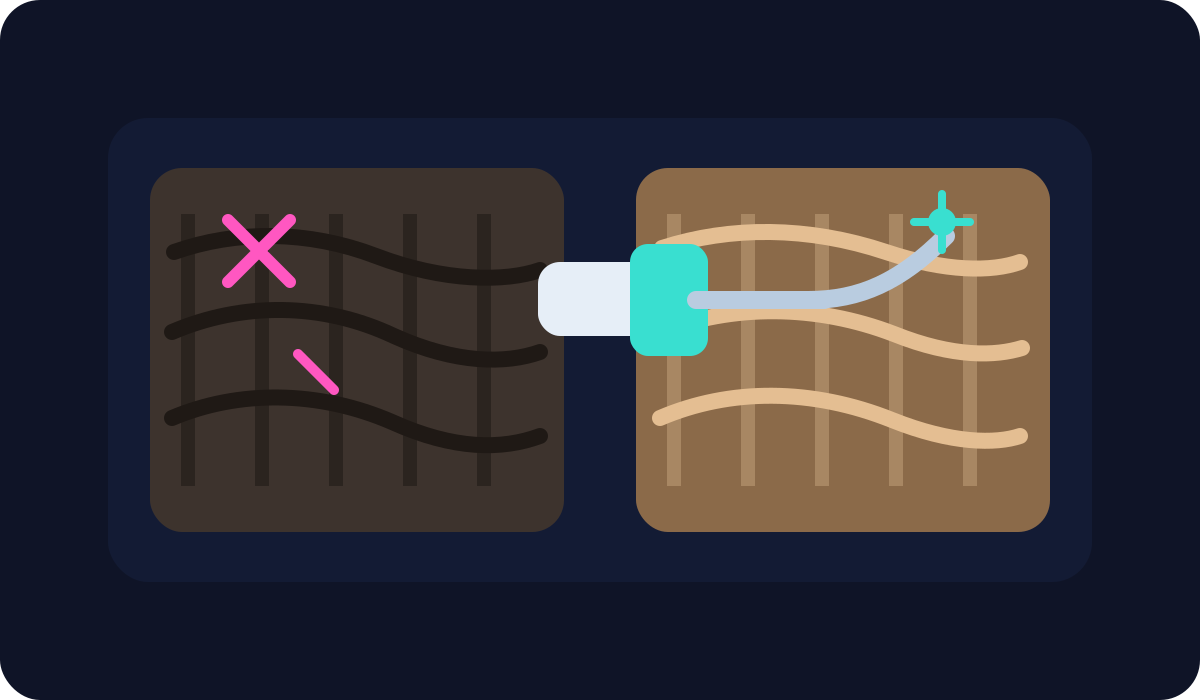
See how original pine floorboards in a Whickham bungalow were restored after the removal of a heavy bituminous coating.
This project took place in a bungalow in Whickham, Gateshead, Tyne & Wear.
The customer wanted to restore the original pine floorboards rather than cover them again, but the floor was in a more difficult starting condition than a standard sanding job.
A heavy bituminous coating was still present on the surface, there was additional water staining and the gaps between the boards were clearly visible.
At the start, the floor looked dark, uneven and difficult to recover.
The old pine boards were hidden beneath a bituminous surface coating that had flattened the appearance of the timber completely.
Historic water staining added to the uneven look, and the visible gaps between boards made the floor feel more tired than it really was.
It was the kind of floor many people would assume needed replacing.
The boards themselves were still worth investigating for restoration, but the amount of coating on the surface meant the preparation stage would be far more involved than on a normal sanding project.
The staining also needed to be discussed honestly from the start.
Before work began, we explained that some of the old water marking might still influence the final appearance and that the best result would depend on how the floor responded once the coating had been removed.
The bituminous coating had to be hand scraped from the surface before sanding could properly begin.
That extra stage was necessary because the coating would otherwise interfere with the sanding process and make it much harder to prepare the boards evenly.
Compared with a normal floor sanding project, this added time and care to the preparation.
Once the coating had been stripped back enough for proper preparation to begin, the floorboards were sanded through the usual stages back to bare timber.
As the pine came through, it became much easier to assess the remaining water staining and the overall character of the floor.
This stage was important because it showed what could be improved directly through sanding and what would need to be managed through the finishing choices.
A dark oak stain was selected for this floor.
The aim was not to hide the timber.
The aim was to reduce the visual impact of the historic water staining and help the floor read more consistently across the room while still keeping a natural look.
On older floors, colour is sometimes less about changing the timber and more about making the final appearance feel more balanced.
The visible gaps between the boards were filled using Wenge acrylic gap filler.
This helped reduce the look of the gaps and improved the overall finish of the floor once the colouring had been completed.
Two coats of Bona Traffic HD Silk Matt were then applied.
That finish gave the floor a practical level of durability for everyday use while keeping the appearance natural rather than overly shiny.
Once completed, the floor looked cleaner, more even in colour and far easier to live with visually.
The original pine floor was kept in place, the historic staining was managed more successfully and the final finish gave the room a far more settled appearance than it had at the start.
This project is a good example of why heavily coated floors should not automatically be written off.
It also shows that staining can often be managed rather than completely eliminated.
Where the structure of the boards is still sound, restoration is often worth investigating before replacement is assumed to be the only sensible route.
If you are looking at an older floor and are not sure whether it is worth saving, our wood floor restoration page explains how we assess timber floors and what the process involves.
If the main worry is whether a difficult floor is beyond saving, our guide Sand or Replace a Wooden Floor? explains how we judge that before any work begins.
You can also send photographs if you would like an initial opinion before deciding what to do next.
Send us a few photos or tell us what you are dealing with. We will explain whether cleaning, restoration or replacement is the most sensible next step.