
Project case study
Parquet Floor Restoration in Gosforth, Newcastle Upon Tyne
A real wood floor restoration case study showing how a tired parquet floor in Gosforth was sanded and refinished instead of being replaced.

A real wood floor restoration case study showing how a tired parquet floor in Gosforth was sanded and refinished instead of being replaced.
The homeowners contacted WoodXpert because their parquet floor had gradually become worn, scratched and tired-looking after years of everyday use.
Although the floor had lost much of its original character and warmth, the parquet itself remained structurally sound. The finish looked past its best, the busiest areas had become flatter in appearance and the room no longer had the warmth that parquet flooring is known for.
Before considering the cost and disruption of replacement, the homeowners wanted to explore restoration first.
This was a traditional parquet floor in a residential property in Gosforth, Newcastle Upon Tyne.
The main issues were easy to see:
Importantly, the parquet blocks themselves remained secure and stable, which made the floor a strong candidate for restoration.
That distinction matters with older timber floors. A floor can look heavily worn from the surface while still being fundamentally worth saving underneath. Where the structure is sound, sanding and refinishing can often transform the appearance far more effectively than homeowners expect.
If you are at the stage of wondering whether a timber floor is worth saving at all, our guide on whether to sand or replace a wooden floor is a useful starting point.
Before any sanding began, the floor was inspected carefully to assess both the condition of the parquet blocks and the state of the existing finish.
This stage helps confirm whether the floor is stable enough for restoration and gives a clearer picture of what the sanding process is likely to reveal once the old finish has been removed.
In this case, the wear was mainly in the surface layer. The floor looked tired, but the parquet itself still had plenty of life left in it.
The main part of the restoration involved sanding the floor to remove the worn finish, surface scratching and the dulling that had built up through years of family use.
Modern floor sanding equipment captures the vast majority of dust, which makes the process much more manageable than many homeowners expect. That does not mean a completely dust-free environment, but it does mean sanding is far more controlled and practical than older methods used to be.
As the sanding progressed, the natural character of the parquet began to come back into view. The pattern looked clearer, the timber looked fresher and the room started to regain the warmth that had been hidden by the tired surface.
Parquet floors rarely wear evenly from wall to wall, so edge and detail sanding are important parts of the process.
These stages help bring consistency back to:
Without that extra attention, the centre of the room may improve while the perimeter still looks tired. The goal is to leave the floor looking balanced and coherent across the whole space.
Once sanding had been completed, the floor was prepared for finishing.
This stage matters because a good finish depends on a properly prepared surface. On parquet in particular, inconsistency tends to show more clearly because the pattern draws the eye across the whole floor.
The preparation stage helps make sure the finish sits more evenly and that the restored parquet looks cleaner, more uniform and ready for everyday use again.
With the floor prepared, a durable protective finish suitable for a busy family home was applied.
The exact finish was discussed with the homeowners beforehand so the final look would suit both the property and the way the room was used. That choice is important because finish affects not only appearance, but also how the floor feels to live with day to day.
If you are weighing up that decision yourself, our guides on the best finish for a wooden floor and the broader wood floor finish guide explain the differences in more practical terms.
The finished floor looked significantly improved.
The restoration brought:
It no longer looked like a floor on the verge of needing replacement. Instead, it looked like a well-restored original feature with plenty of life left in it.
That is one of the biggest strengths of parquet restoration. The process does not just make the floor cleaner. It helps reveal the natural character that was already there and then protects it properly for future use.
Parquet floors are often especially rewarding to restore.
Traditional parquet has a look that is difficult to replace convincingly. Once restored, the pattern and tone often give a room much more warmth and character than newer alternatives.
Where the blocks are stable and the timber still has enough usable material, restoration can extend the life of the floor considerably.
Replacement often involves more than just fitting a new floor. There is the removal of the existing floor, the cost of new materials and the wider disruption to the room. Restoration is often the more sensible investment when the original parquet is still salvageable.
Keeping and restoring an existing timber floor is also a more sustainable option than removing and replacing it unnecessarily.
That is why many original parquet floors respond so well to professional restoration. The floor often has more to give than its worn appearance suggests.
The before-and-after difference showed just how much of the problem was tired finish and surface wear rather than structural failure.
Before restoration, the parquet looked flat, worn and visually heavy in the busiest areas. After sanding and refinishing, the pattern was clearer, the timber looked brighter and the room felt much fresher overall.
This project can also be viewed through our Before & After page if you want to compare it with other real wood floor restorations.
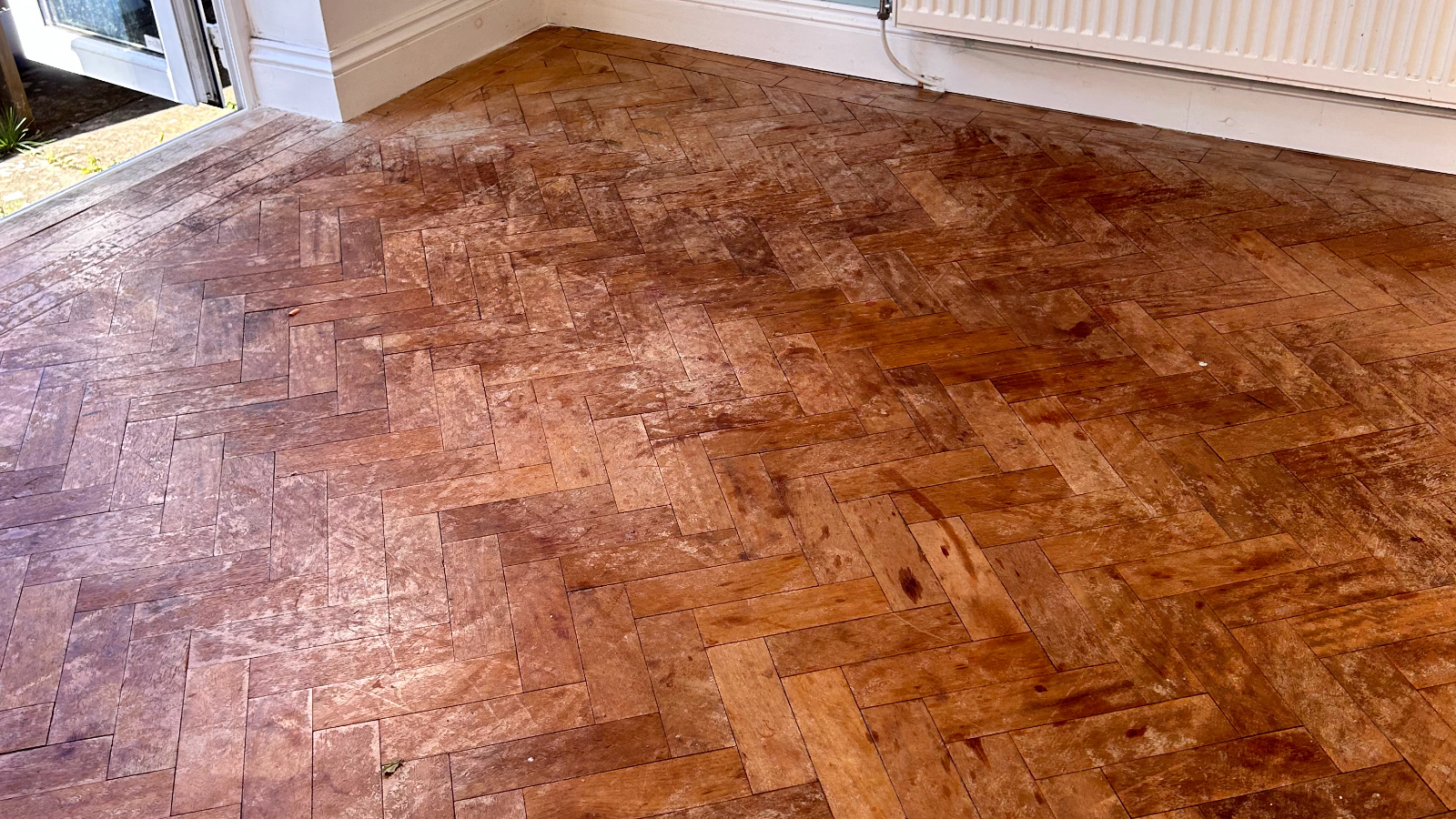
Before restoration: the parquet looked dull, worn and tired through years of everyday use and surface scratching.
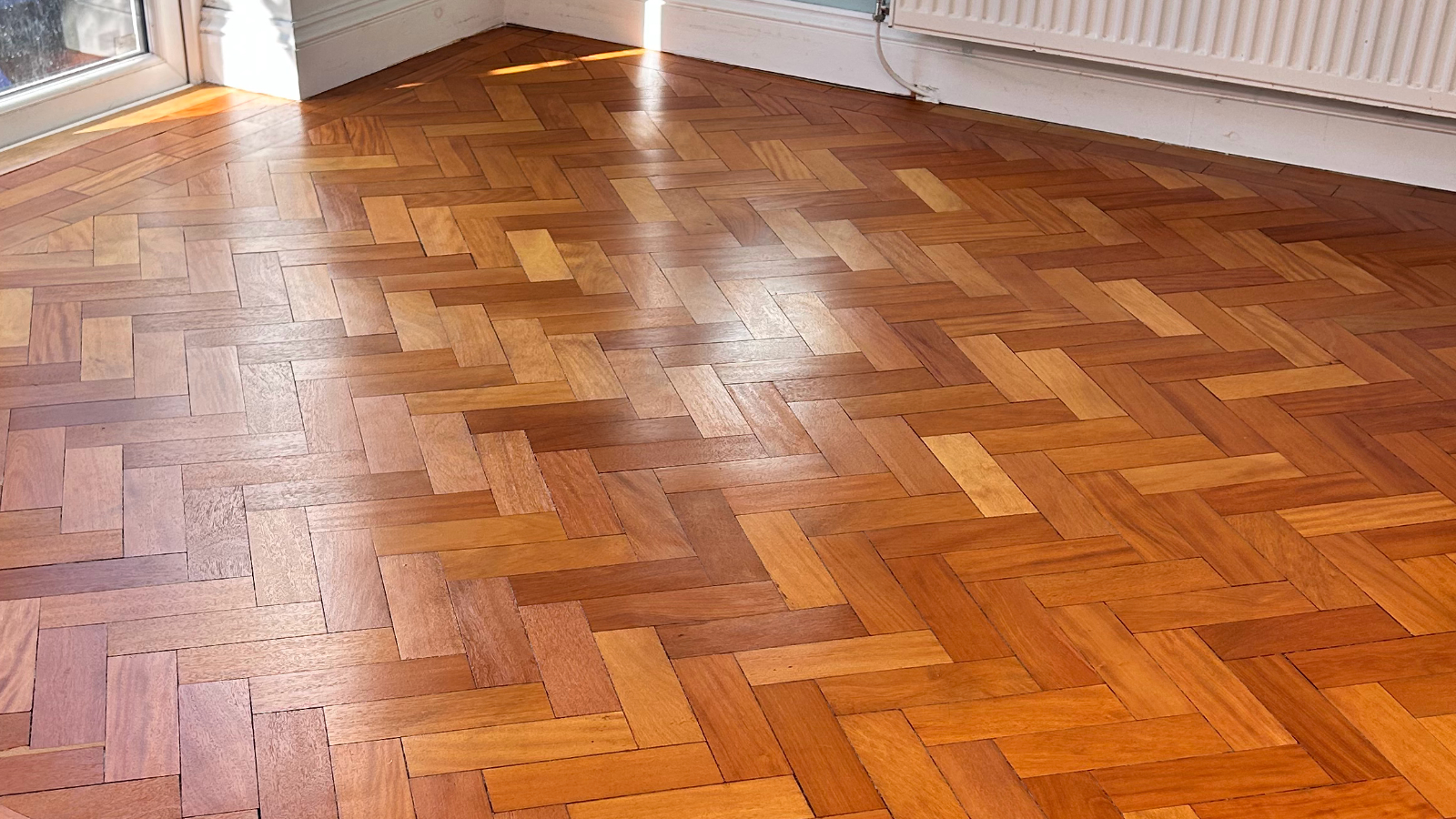
After restoration: sanding and refinishing brought back a cleaner, warmer and more even look while revealing the parquet pattern more clearly.
The homeowners were able to retain the original parquet floor while dramatically improving the appearance of the room.
That is often the real value of restoration. Instead of assuming replacement is inevitable, homeowners get the chance to restore the floor they already have and keep the character that made it worth having in the first place.
If you want to browse the wider advice section, our wood floor restoration guides bring together practical articles on sanding, finish choices and restoration decisions in one place.
Before assuming replacement is necessary, it is often worth getting professional advice on whether restoration is still a realistic option.
Our wood floor restoration service page explains how we assess timber floors, what the process involves and when sanding and refinishing are likely to be the most sensible next step.
Send us a few photos or tell us what you are dealing with. We will explain whether cleaning, restoration or replacement is the most sensible next step.