Heavily Stained Armchair Restoration and Sanitisation in Durham
The customer contacted us regarding a heavily used fabric armchair that had accumulated years of contamination.
The chair showed heavy body oil build-up, general grime, organic staining, deep soiling on both arms and widespread discolouration. The aim was to improve the appearance of the chair and have it professionally cleaned and sanitised, while being realistic from the outset that complete stain removal could not be guaranteed because of the age and severity of the contamination.
The problem
This was not a case of one recent spill or light everyday dullness.
The fabric had been carrying long-term contamination for years, especially on the high-contact areas where hands, arms and regular seating pressure had gradually driven oils and soiling deeper into the upholstery.
By the time the chair was assessed, the visible change in colour and condition was significant enough for the customer to question whether restoration was still possible.
Why some upholstery becomes heavily stained
Some upholstery becomes stained not simply from surface dirt, but from years of body oils, perspiration, skin contact, everyday use and organic contamination.
Over time, those contaminants can penetrate deeper into the fabric fibres and even into the upper layers of the cushioning.
When that happens, cleaning can often still achieve a major improvement, but it is important to be honest that some permanent staining may remain if the contamination has affected the fibres over a long period.
Assessing the chair
The first step was a detailed inspection of the fabric condition, contamination level and the type of staining visible across the chair.
It was clear that the chair needed more than a light surface clean. Routine vacuuming had not been enough because the contamination levels were unusually high and much of the soiling was oily and ingrained rather than loose and dry.
That is why expectations were discussed clearly before work began. Significant improvement was realistic, but complete restoration could not be promised.
The cleaning process
The process began with thorough vacuuming to remove dust, debris and loose contamination from the fabric.
Heavily contaminated areas were then treated using upholstery-safe degreasers and specialist cleaning agents designed to break down oils and stubborn soiling.
Those solutions were worked into the fabric to help loosen the embedded contamination before extraction cleaning began.
Because the chair was carrying unusually heavy soiling, a full wet-cleaning extraction process was used rather than a lighter low-moisture approach. Once the main cleaning stages had been completed, an oxidising treatment was applied in an attempt to reduce and lighten the remaining organic staining.
The chair was then left to dry cleaner, fresher and significantly improved in appearance.
Many upholstery projects can be cleaned successfully using low-moisture methods, but this chair needed a deeper flushing process.
The contamination levels were unusually high, deeper rinsing was required and sanitisation was an important part of the job.
That made hot water extraction the more appropriate choice here. It allowed dissolved contamination to be removed more thoroughly rather than simply treated at surface level.
Project photographs
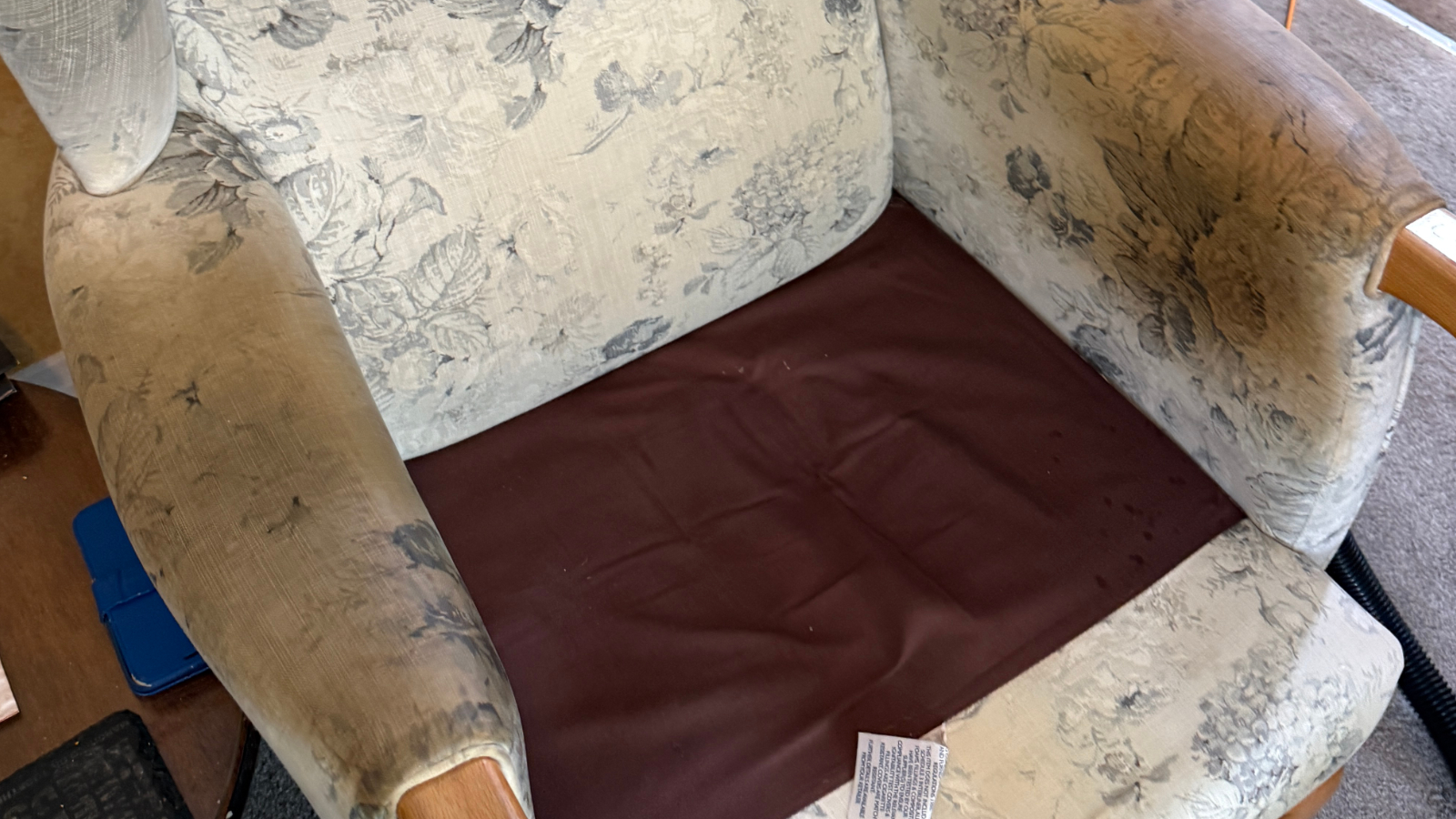
Before cleaning: years of contamination, body oils and staining had built up across the fabric.
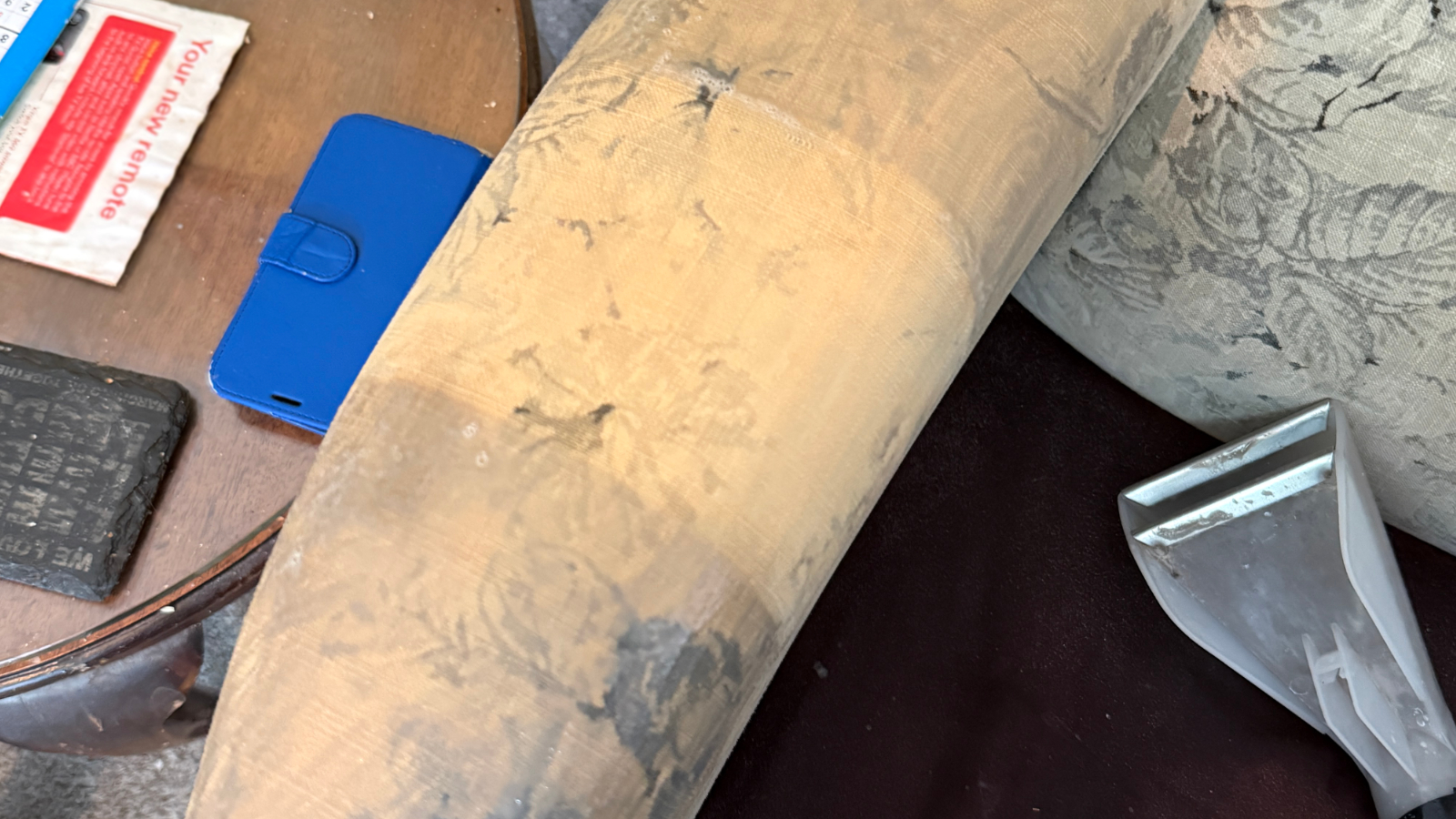
During cleaning: a test section showed the level of contamination being removed from the upholstery.
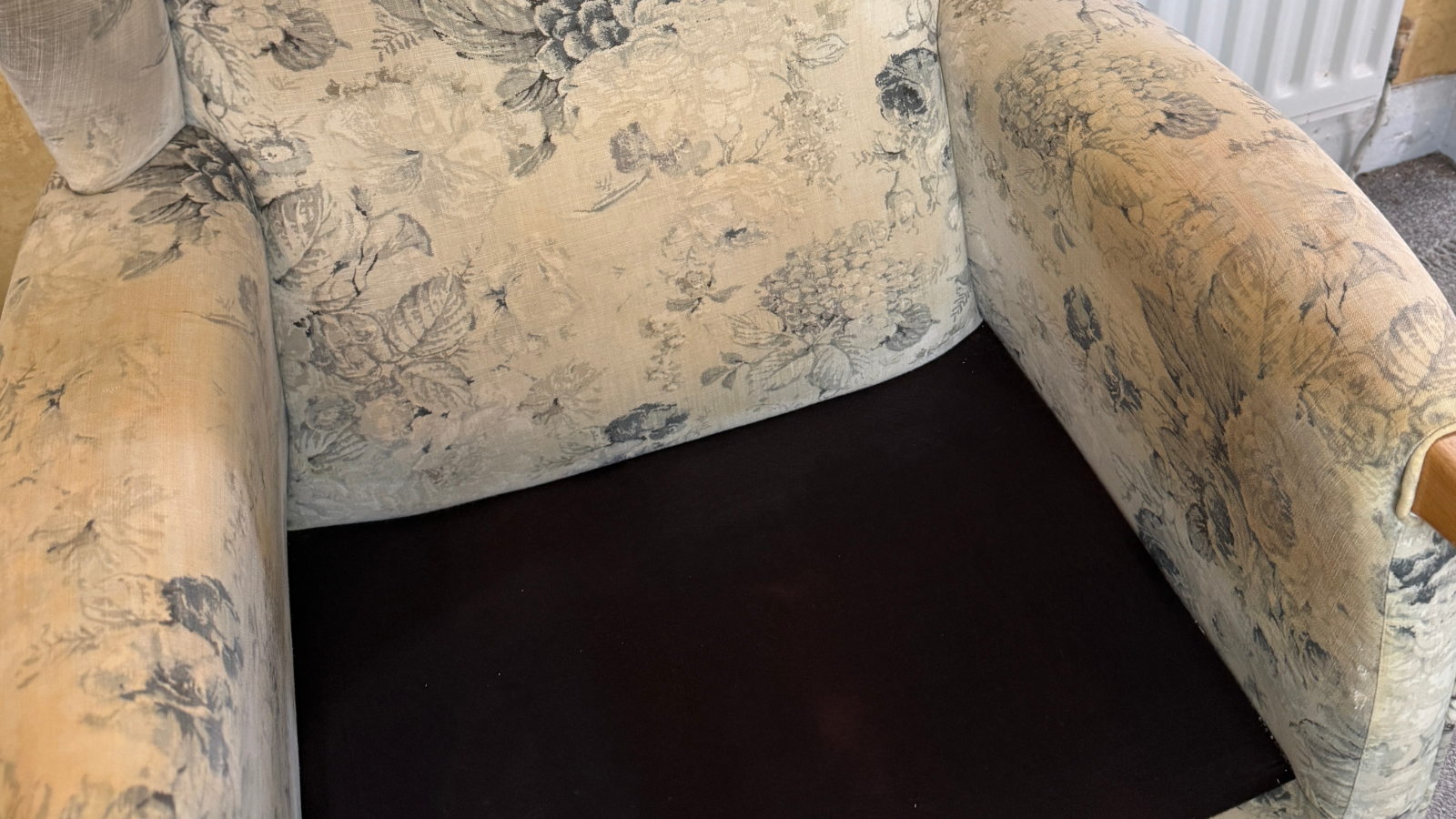
After cleaning: specialist upholstery cleaning and sanitisation achieved a major visual improvement.
The final result
Major contamination was removed, the chair was successfully sanitised and the overall appearance improved significantly.
The fabric became noticeably cleaner and the heavy surface soiling was no longer dominating the appearance of the chair.
At the same time, it is important to be honest about the limits. Some staining remained visible, certain long-term marks had become permanent and complete restoration was not possible.
For upholstery in this condition, achieving a major improvement is still a successful outcome. The chair was left much cleaner, fresher and far more presentable than when it started.
Can all upholstery stains be removed?
No.
Some stains respond very well to professional cleaning, while others only improve partially because the contamination has been sitting in the fabric for too long or has permanently affected the fibres.
That is why honest assessment matters. Our Fabric Sofa Arm Restoration – Removing Built-Up Oils and Everyday Soiling in Durham case study shows a more straightforward example of oily contact build-up, while Family Fabric Sofa Restoration After Water Marks and Everyday Family Stains shows how a different type of upholstery marking can behave.
When is upholstery cleaning still worthwhile?
Cleaning is often still worthwhile even when complete stain removal is unlikely.
If the goal is to remove major contamination, sanitise the furniture, improve appearance and avoid unnecessary replacement, a substantial improvement can still make the job worthwhile.
If you are dealing with heavily used upholstered furniture in Durham or nearby, our Durham area page and upholstery cleaning page explain the sort of results we aim for and the limits we are careful to explain in advance. Send a few photographs over and we can advise on whether cleaning is likely to be a sensible next step.