Family Fabric Sofa Restoration After Water Marks and Everyday Family Stains
This family fabric sofa had developed visible water marks, spill marks and staining caused by normal family life.
Young children had regularly used the sofa and, over time, drinks, food, sweets and minor accidents had left obvious marks across the cushions. The customer was concerned the fabric had been permanently damaged.
The problem
The sofa was not dealing with one single stain.
Instead, the visible change had built up through ordinary day-to-day use, with repeated small spills and marks gradually leaving the cushions looking patchy, uneven and harder to live with.
That is often the point where people start to assume the fabric itself has been ruined.
Why water marks appear on fabric upholstery
Many upholstery marks are not permanent damage.
In a lot of cases, what you can see on the surface is actually:
- contamination
- spill residue
- uneven wetting
- previous cleaning attempts
- dried residues left behind after accidents
That is why water-marked upholstery can sometimes improve far more than people expect once the fabric is cleaned properly and evenly.
Assessing the sofa
Before starting, the key question was whether the visible marks looked like removable contamination rather than permanent wear or dye damage.
The sofa was still structurally sound, which made restoration worth attempting.
That kind of assessment matters because the right cleaning approach depends not just on the stain itself, but on the condition of the fabric and how earlier spills or spot-cleaning attempts may have dried.
The cleaning process
The first stage was thorough upholstery vacuuming to remove dust, crumbs, loose debris and hair from the surface and fabric seams.
After that, the sofa was dismantled as far as practical so the individual cushions could be removed and cleaned separately. Where possible, both sides of the cushions were cleaned.
Targeted stain treatment was then applied to the obvious drink spills, food marks and visible staining before the whole sofa was cleaned using our preferred low-moisture dry foam upholstery system.
That approach helps with deep cleaning, deodorising, shorter drying times and reduced risk of over-wetting.
Why whole-panel cleaning matters
With some upholstery fabrics, it is important to clean the entire panel or cushion evenly rather than only treating the visible mark.
Doing that helps prevent uneven drying and reduces the risk of fresh water marks appearing as the fabric dries.
It is one of the reasons spot-cleaning alone can sometimes leave a sofa looking patchier than before, even when the original spill has been improved.
Project photographs
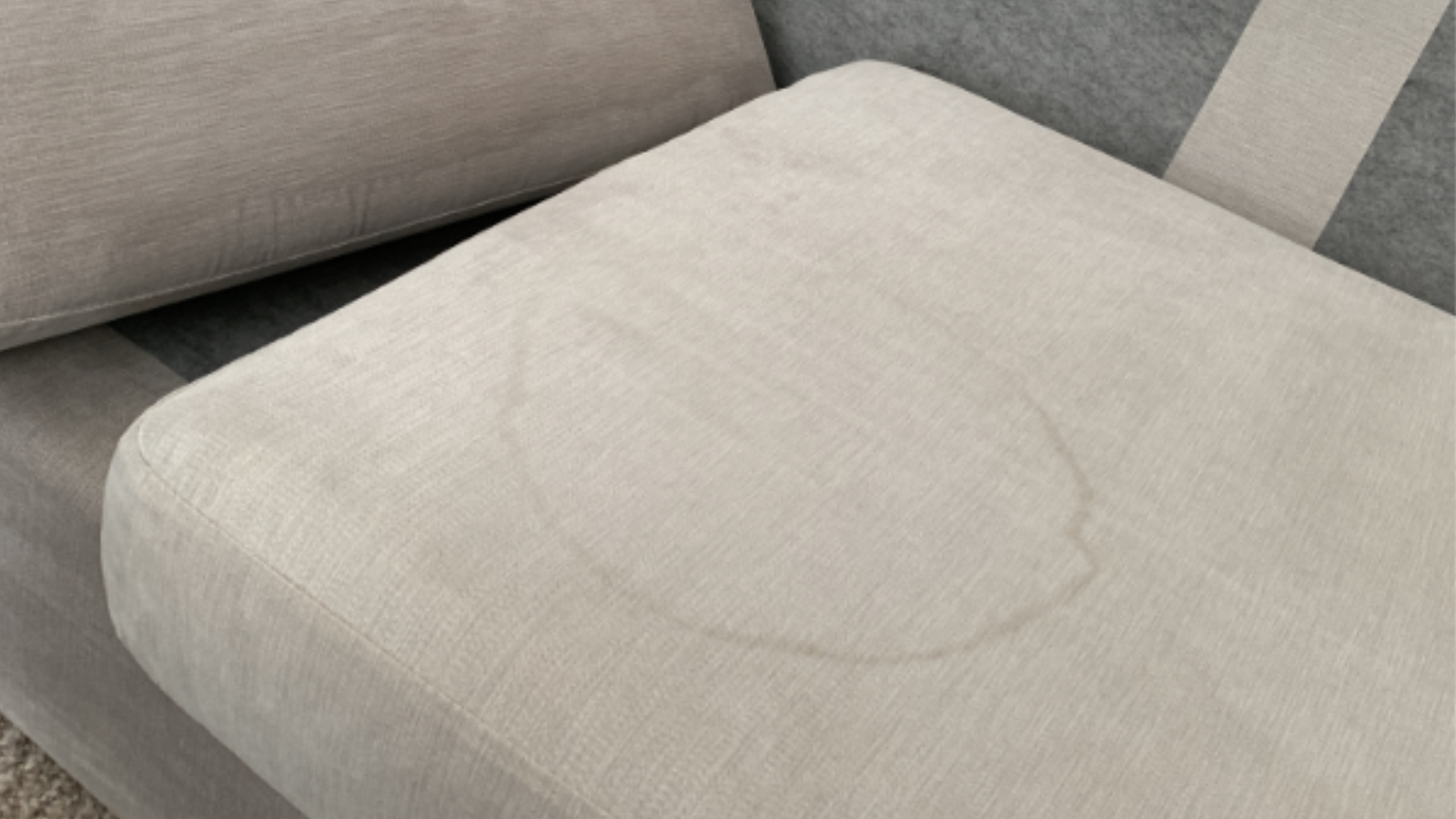
Before cleaning: water marks and everyday family staining had left the cushions looking patchy and uneven.
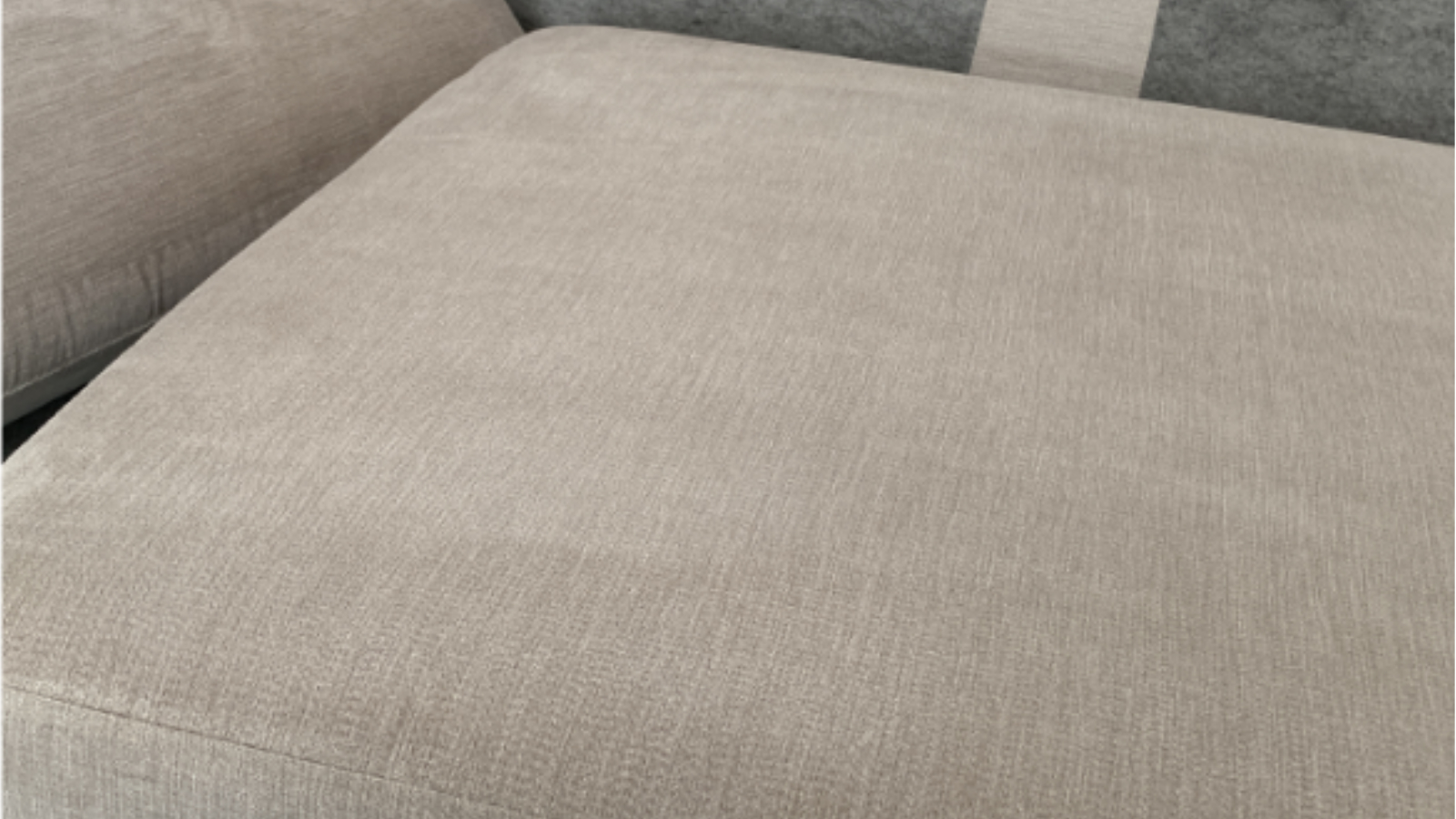
After cleaning: low-moisture upholstery cleaning and stain treatment restored a cleaner, more even appearance.
The final result
The visible water marking and staining were successfully removed and the sofa returned to a much cleaner, more consistent appearance.
The result made it clear that the issue had been surface contamination and dried residue rather than the suite being permanently damaged beyond help.
Can water-marked upholstery usually be restored?
Not always, but often it can be improved significantly.
If the marks are mainly caused by spill residue, uneven wetting or previous cleaning attempts, the outlook is often much better than people expect.
That is why assessment matters before replacement is assumed to be the only sensible answer.
Advice for families with young children
In busy family homes, sofas often collect far more small spills and residues than people realise.
The important thing is not to assume that visible marks automatically mean permanent damage. A lot of the time, the real issue is what has dried into the fabric over months or years rather than the sofa itself being finished.
Our guide Can My Sofa Be Cleaned Or Does It Need Replacing? explains how we usually think about that decision, and our Fabric Sofa Restoration After Heavy Arm Grease and Body Oil Build-Up case study shows another example of a sofa that looked worse than its actual condition.
If you are dealing with a similar sofa, our upholstery cleaning page explains how we approach different fabrics, drying times and realistic results. Send a few photos over and we can advise on whether cleaning is likely to be the sensible next step.