Slate Floor Deep Clean & Colour Revival In Chester-le-Street
This Chester-le-Street project involved a slate floor running through a kitchen, dining room and utility area that had become heavily soiled after years of everyday use.
The stone itself still had plenty of character, but the surface looked dull and lifeless, and the grout lines had become heavily contaminated. The customer wanted the floor brought back to a cleaner, fresher appearance without losing the natural feel of the slate.
Introduction
Slate floors can cope with years of use, but they do not always stay visually fresh without the right maintenance.
In busy family areas such as kitchens, dining spaces and utility rooms, the surface has to deal with constant foot traffic, cooking residue, tracked-in dirt and the general build-up that comes from normal daily living. Over time, that build-up can flatten the appearance of the stone and hide the colour variation that gives slate much of its appeal.
That was the situation here. The floor had not lost its potential, but it had lost much of its colour and presence under years of contamination.
The Problem
The slate floor extended across the kitchen, dining room and utility area in a home in Chester-le-Street, County Durham.
After years of use, the floor had become heavily soiled overall. The slate looked dull and lifeless, while the grout lines had become noticeably contaminated and were making the whole floor look older than it really was.
This kind of problem is common with natural stone floors. Once the contamination builds up and any previous finish wears back, the surface can start to look permanently tired even when the stone itself is still well worth preserving.
Our Cleaning Process
The first step was a full vacuum of the floor so loose dirt, dust and dry debris were removed before wet cleaning products were introduced.
The slate was then deep cleaned using professional cleaning products chosen to break down the heavy soiling that had built up across both the stone and grout lines over time.
Once the cleaning solution had done its work, the floor was mechanically scrubbed so the contamination could be worked out of the surface more effectively than ordinary maintenance cleaning would allow. As the dirt lifted, it was extracted away from the floor rather than being left behind in the stone or grout.
After the deep cleaning stage, the floor was allowed to dry fully. That drying period matters because the sealer needs to go onto a properly dry surface if it is going to enhance the stone well and provide reliable protection.
Once dry, a colour-enhancing sealer was applied to restore more of the slate’s natural richness and to protect both the stone and the grout lines going forward.
Restoring The Colour Of Slate
One of the main changes customers notice after this type of work is not just that the floor looks cleaner, but that the slate starts to show its natural character again.
Slate often appears flat and lifeless when it is carrying years of built-up contamination. Even if the stone is still sound, the colour variation becomes muted and the floor can lose much of the depth that originally made it attractive.
Once the heavy soiling is properly removed and the right sealer is applied, those richer tones can show more clearly again. The aim is not to create an artificial gloss, but to let the natural colour of the stone come back through in a more balanced way.
Why Slate Floors Benefit From Sealing
Sealing plays an important part in the long-term maintenance of many slate floors.
Without a suitable seal, natural stone and grout can be more vulnerable to holding onto dirt, grease and everyday contamination. That makes the floor harder to maintain and can allow the appearance to dull more quickly over time.
A suitable sealer helps by:
- supporting richer natural colour
- helping protect the stone surface
- helping protect the grout lines
- making routine maintenance easier
- reducing how quickly contamination settles back in
That is why deep cleaning and sealing usually work best as a combined process rather than treating them as separate concerns.
The Results
Once the floor had been cleaned, dried and sealed, the overall appearance was much fresher and more settled.
The slate looked cleaner, the natural colour had more depth again and the grout lines no longer dragged down the look of the whole floor. The difference was not about making the stone look overly finished. It was about bringing back the colour and character that had been hidden under years of soiling.
The new seal also helped leave the floor better protected and easier to maintain in the future.
Before & After Results
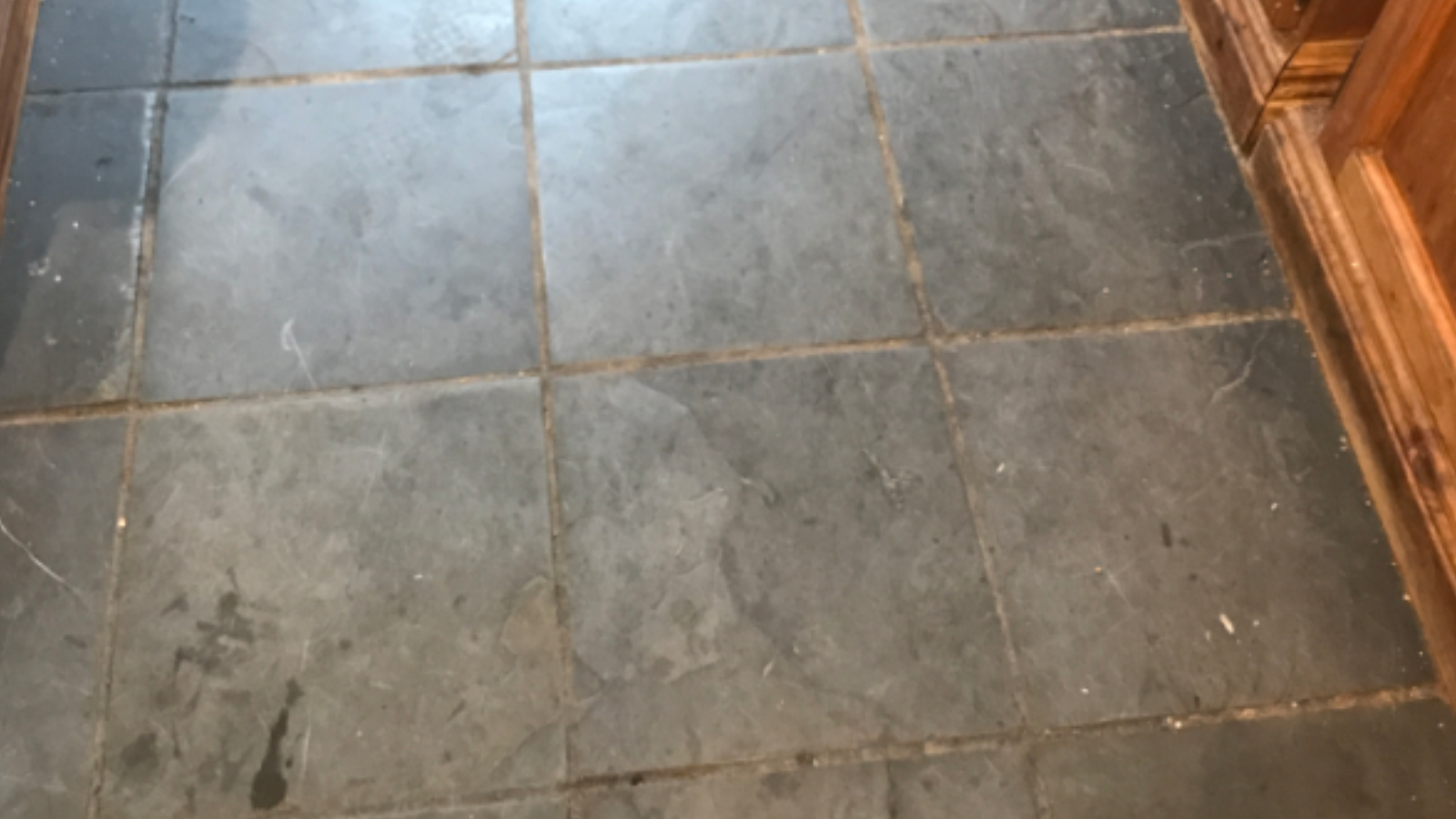
Before restoration: the slate and grout lines had become heavily contaminated and the floor had lost much of its natural depth.
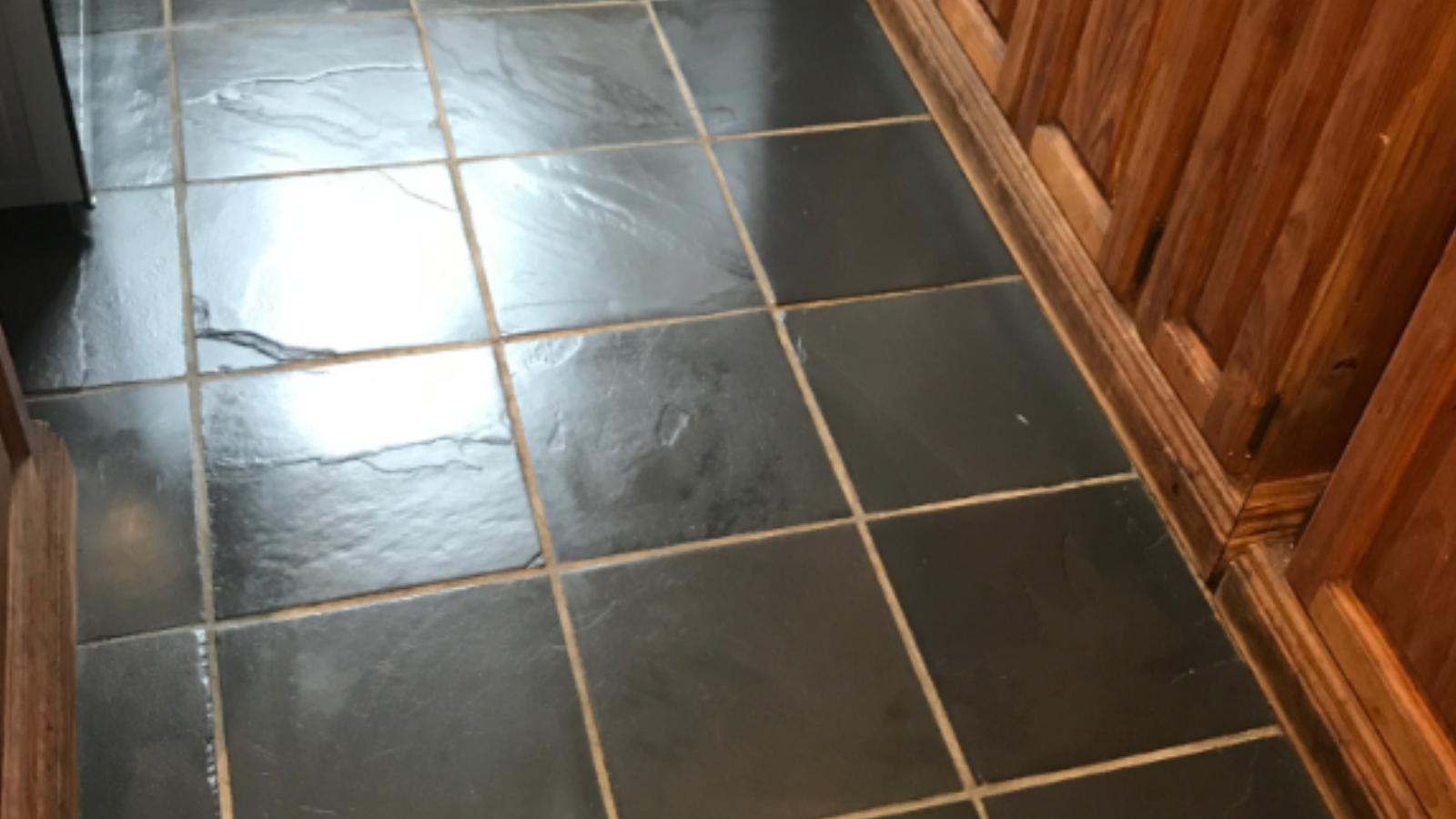
After restoration: deep cleaning and sealing revived the slate colour and left the whole floor looking more even and better protected.
Need Slate Floor Cleaning?
If a slate floor is looking dull, lifeless or harder to keep clean, it may not need replacing. In many cases, the real issue is years of contamination combined with the lack of a suitable protective finish.
Our tile and vinyl floor cleaning page explains how we approach slate, grout and other hard floor surfaces that need more than routine household cleaning.
One practical note: the additional support articles you asked to link to do not currently exist in the site content, so I have not added broken links for them. If those guides are added later, this case study would be a natural place to connect them.