Engineering Workshop Office Carpet Tile Restoration After Oil Contamination
This project involved carpet tile cleaning inside a supervisor’s office attached to an engineering workshop.
Over time, oily residues and industrial contamination had been repeatedly walked into the office from the production area, leaving the carpet tiles noticeably darker and harder to recover through routine vacuuming alone.
The challenge
The office was not dealing with ordinary dry office soiling.
The contamination had a heavier industrial feel to it because the office sat directly off the workshop environment and daily foot traffic kept carrying oily residues through from production areas into the carpeted space.
That build-up had gradually darkened the tiles and made the office look more tired than it should have done.
Why industrial offices become heavily contaminated
Supervisor offices and similar spaces often sit right on the boundary between clean administration areas and active workshop floors.
That means dirt is not just coming from ordinary foot traffic. It can include fine industrial debris, oily residues and the kind of contamination that keeps getting tracked in even when the office itself is vacuumed regularly.
That is why carpets in these environments often need a more purposeful cleaning process than a normal office maintenance clean.
Assessing the carpet condition
Before starting, the first job was making sure the carpet tiles were heavily contaminated rather than simply beyond use.
Although they looked dark and heavily marked, the tiles were still worth trying to restore because the main issue appeared to be build-up in the fibres rather than clear structural failure.
That is often the most important distinction in industrial office environments. Dirt and contamination can make carpet tiles look ready for replacement well before they have actually reached that point.
The cleaning process
To minimise disruption, the work was scheduled for a Saturday morning while the factory was closed.
That allowed the area to be cleaned without people moving through the space and made it easier to work methodically through the office.
The process involved:
- Thorough commercial vacuuming
- Application of a concentrated degreasing pre-spray
- Appropriate dwell time to break down oily contamination
- Mechanical agitation
- Extraction of dissolved contamination
- A final bonnet cleaning pass to remove remaining residue and improve appearance
Removing oily residues from carpet tiles
This was the part that mattered most on the job.
General office soil is one thing, but oily contamination behaves differently and often needs more careful breakdown before meaningful improvement is possible.
That is one reason workshop-adjacent carpet tile cleaning can look far more dramatic afterwards than people expect. Once the oily residues are properly lifted away, the original carpet colour and pattern often come back far more clearly.
Project photographs
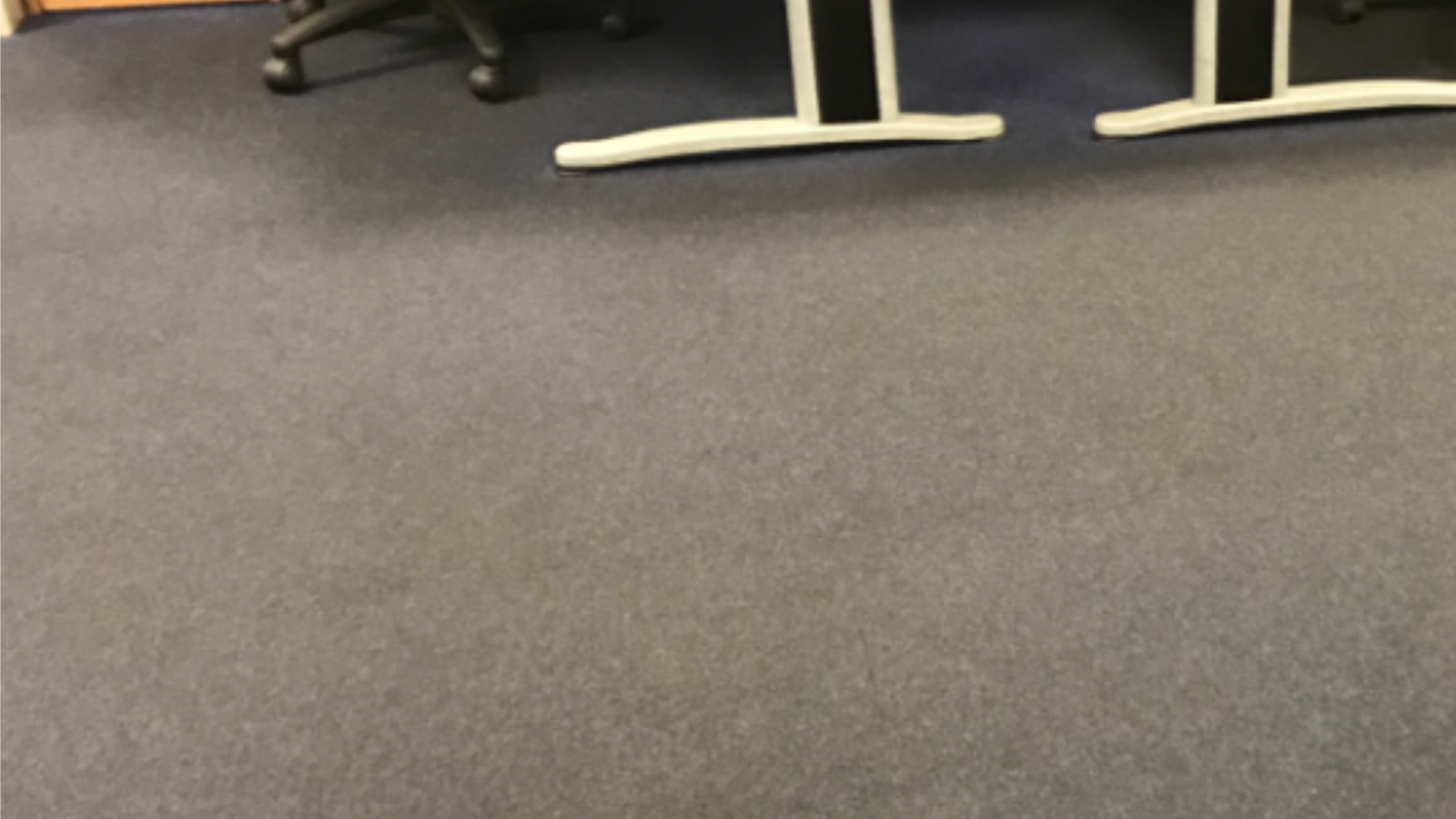
Before cleaning: oil contamination and tracked industrial residues had darkened the office carpet tiles.
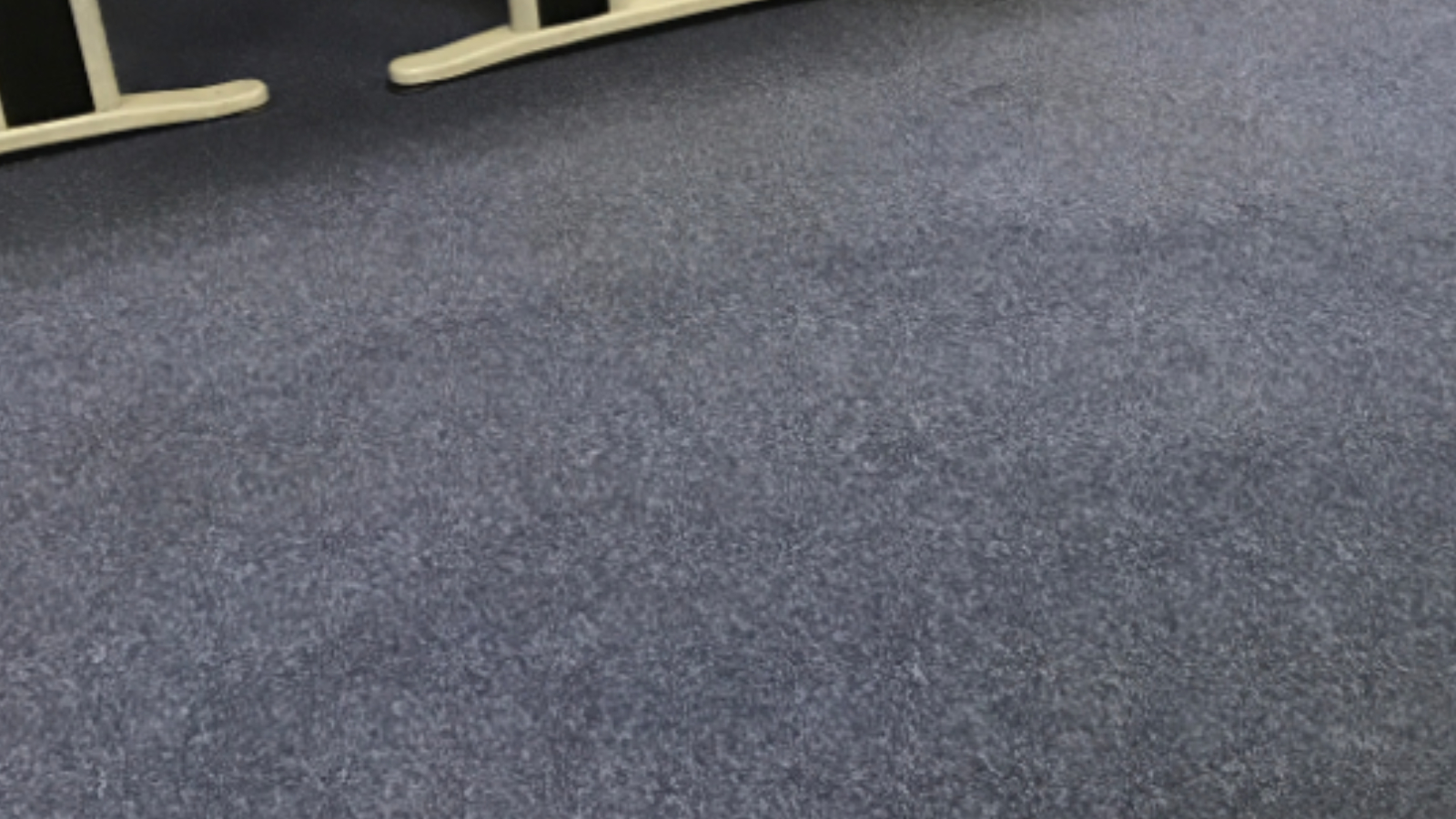
After cleaning: degreasing, extraction and bonnet cleaning restored a noticeably cleaner, brighter appearance.
The final result
Once completed, the carpet tiles showed a significant improvement in appearance.
The oily contamination had been removed, the tiles looked brighter and the office felt like a cleaner, more usable working environment again.
Just as importantly, the business avoided premature carpet replacement.
Why cleaning was better than replacement
In environments like this, replacement is often considered because the carpet tiles look heavily contaminated and tired.
But if the main problem is build-up rather than failure, cleaning can be a much more sensible first step.
Our guide Commercial Carpet Cleaning vs Replacement explains why that decision is often made too early when contamination is doing most of the damage visually.
Advice for engineering and manufacturing businesses
If carpets in an office, supervisor room or workshop-adjacent admin space are starting to look darker, more uneven or more contaminated than routine vacuuming can manage, it is worth assessing whether cleaning can recover them before replacement is approved.
Our commercial cleaning page explains how we handle active work environments, and our articles on Low-Moisture Carpet Cleaning for Offices and How Often Should Commercial Carpets Be Professionally Cleaned? are useful starting points if you are planning maintenance or one-off restoration work.
If you are dealing specifically with carpet tile cleaning methods, our guide on what’s the best method for commercial carpet tiles is a useful next step. For the wider problem of traffic lanes and repeated wear in busy environments, how to maintain carpets in high-traffic areas is also worth reading.
If you are dealing with a similar commercial carpet problem, send over a few photos and some site details and we can advise on a practical cleaning plan before replacement becomes the default decision.